
Commercial property has a way of looking straightforward until you get into the details. A parking lot addition crosses an easement line. A fence does not match the deed. A lender asks for an ALTA survey two weeks before closing. In those moments, a qualified commercial land surveyor is not a nice to have. They are the professionals who turn uncertainty into documented facts you can build, buy, insure, or finance with confidence.
At Southpoint Texas Surveying, we work with property owners, brokers, lenders, engineers, and builders across South Texas. Everyone wants fewer surprises and fewer delays. This guide explains what commercial surveying involves, when it is typically required, and how to hire the right team for your site.
What Does a Commercial Land Surveyor Do?
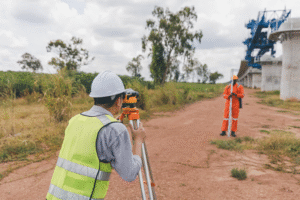
A commercial land surveyor measures and documents what is actually happening on a piece of property, then ties those facts back to the legal description in the deed and recorded plats.
In practical terms, we help answer questions like:
- Where are the property lines, and how confident are we in their location based on records and field evidence
- What improvements exist on the site, such as buildings, paving, fences, utilities, and drainage features
- Are there recorded easements, right of way lines, or encroachments that affect how the property can be used
- What elevations and slopes exist, which matters for drainage, design, and permitting
Commercial sites add complexity because the stakes are higher and more people rely on the same survey. A buyer wants to know what they are purchasing. A lender wants to reduce risk. A design team needs reliable base data. And a contractor needs layout points that match the plan set.
How Is Commercial Surveying Different From Residential? 
Residential surveys are often focused on confirming boundaries and showing basic improvements for a home purchase. Commercial surveys can include that, but they usually go further.
- More stakeholders. Commercial deals involve lenders, title companies, attorneys, engineers, architects, and municipalities with specific survey requirements.
- Higher documentation standards. Many commercial transactions require an ALTA or lender driven deliverable with detailed certifications.
- More site features to locate. Parking, access drives, stormwater features, utilities, signage, and multiple structures often need to be mapped.
- Tighter coordination with design and construction. A commercial land surveyor often supports planning, permitting, and construction staking, not just the closing.
In South Texas, dense brush, older monuments, changes in drainage patterns, and rapid development in the Rio Grande Valley can all make careful field work and records research especially important.
When Do You Need a Commercial Land Surveyor?

Most clients call us for one of three reasons: they are buying or refinancing, they are planning improvements, or they are already in construction and need layout or verification.
A good rule is this. If a decision depends on where something is located on the ground, a commercial land surveyor should be involved before that decision becomes expensive to change.
Commercial surveying is commonly needed for:
- Purchasing or selling commercial land or an improved site
- Refinancing, especially when a lender or title insurer requests specific survey standards
- Site plan development for retail, office, industrial, or multifamily projects
- Subdividing land or combining tracts
- Expanding parking, adding a drive, or modifying access points
- New construction layout and grading work
- Verifying as built conditions for payment or closeout
What Is an ALTA/NSPS Land Title Survey?
An ALTA/NSPS Land Title Survey is a surveying standard used widely in commercial real estate. Title companies and lenders commonly request it because it combines boundary research with detailed mapping of improvements, access, easements, and other matters that affect title.
An ALTA survey is not just a map. It is a documented package that can include specific certifications, Table A items, and coordination with the title commitment.
Beyond ALTA surveys, you may need:
- Boundary survey. Establishes property lines based on the legal description and field evidence.
- Topographic survey. Maps the terrain and visible features with elevations and contours for design and drainage planning.
- Construction staking. Transfers design points from plans to the ground so contractors can build in the correct location.
Many commercial jobs use a combination. For example, a boundary and topo survey may support civil design, then construction staking and an as built survey support construction and closeout.
How Does the Commercial Survey Process Work?
While each property is different, a commercial survey typically follows a consistent workflow.
- Scope confirmation. We clarify what you need, who is requesting it, and any required standards or certifications.
- Records research. We review deeds, plats, easements, and relevant public records.
- Field work. We locate evidence on the ground, measure improvements, and collect terrain or utility data as needed.
- Analysis and drafting. We reconcile record information with field measurements and prepare the survey deliverable.
- Review and delivery. We deliver the final survey and help address reasonable questions from your lender, title company, or design team.
What Documents Help Avoid Delays With a Commercial Survey?
Delays are usually not caused by measuring. They are caused by missing information or limited access.
To keep the schedule predictable, provide:
- The most recent deed and any prior surveys you have
- The title commitment and requested Table A items for ALTA work
- Contact information for the lender, title company, or project manager if coordination is required
- Gate codes, keys, or an access plan for fenced areas
- Notes on known utilities, underground tanks, or restricted areas
If a site is occupied, a quick conversation about safe access and operating hours can prevent repeat trips. For additional guidance, you can find helpful resources on our blog.
What Affects Commercial Survey Cost and Turnaround?
Commercial survey pricing is not one size fits all, because the scope and risk differ from site to site.
Common factors that affect cost and turnaround include:
- Property size and shape. Irregular tracts and large acreages take more field time and analysis.
- Record complexity. Older descriptions, multiple conveyances, or unclear boundary history require more research.
- Site conditions. Heavy vegetation, standing water, limited access, or active construction can slow field work.
- Deliverable requirements. ALTA standards, Table A items, and specialized mapping increase drafting and coordination time.
- Urgency. Tight deadlines may require overtime coordination, but it is always better to plan early if possible.
In many transactions, timing is as important as cost. A survey that arrives late can delay underwriting, permitting, or contractor mobilization.
How Do You Choose a Commercial Land Surveyor in South Texas?
Choosing a commercial land surveyor is partly about credentials and partly about communication. You want a team that can produce accurate work, but also one that will coordinate cleanly with the people who depend on the deliverable.
In South Texas, local familiarity matters. We often deal with older plats, rapid development patterns, and properties where improvements have changed over time.
Questions To Ask Before You Hire
- What survey type are you recommending for our goal, and why
- If this is an ALTA survey, will you coordinate with the title commitment and confirm the Table A items
- What is your expected turnaround, and what could change it
- What access will you need on site
- What will the deliverable include, and who can we list for certifications
- If something unexpected shows up, such as a possible encroachment, how will you document it
If you would like to talk through your site and what you are being asked for, reach out through our contact page. We are glad to help you clarify requirements before they become a closing or construction delay.
Conclusion
Hiring a commercial land surveyor is really about protecting decisions that are expensive to undo. Whether you are buying a tract, refinancing an existing site, or preparing to build, a well scoped survey replaces assumptions with clear documentation that lenders, title companies, design teams, and contractors can rely on.
At Southpoint Texas Surveying, we focus on accuracy, clear communication, and practical local knowledge—because that is what reduces disputes and keeps projects moving across South Texas. If you are not sure which survey deliverable you need, reviewing your documents and timeline early usually makes everything easier.
How long does a commercial land survey take?
Most commercial land surveys take 1-3 weeks depending on property size, complexity, and deliverable requirements. ALTA surveys typically require more time due to title coordination and Table A items. Rush services may be available but planning ahead ensures the best results.
How much does a commercial land surveyor cost?
Commercial survey costs vary based on property size, record complexity, site conditions, and required deliverables. A basic boundary survey costs less than a full ALTA/NSPS survey with multiple Table A items. Request a detailed quote after discussing your specific requirements.
What is the difference between a boundary survey and an ALTA survey?
A boundary survey establishes property lines based on legal descriptions and field evidence. An ALTA survey includes boundary work plus detailed mapping of improvements, easements, access points, and certifications required by lenders and title companies for commercial transactions.
Do I need a new survey if I already have one from a previous owner?
Lenders and title companies often require a current survey, especially for commercial transactions. Existing surveys may be outdated, missing recent improvements, or lack certifications needed for your transaction. A commercial land surveyor can advise whether an update or new survey is necessary.
Can a commercial land surveyor identify easements on my property?
Yes. A commercial land surveyor researches recorded easements and shows them on the survey. They also identify potential encroachments where improvements may cross easement lines, helping you understand restrictions before buying, building, or financing.
What happens if a survey reveals an encroachment?
The surveyor documents the encroachment on the survey drawing. From there, your attorney, title company, or lender will advise on resolution options, which may include boundary agreements, easement modifications, or purchase negotiations.
Is a topographic survey required for commercial development?
Most commercial development projects require a topographic survey for site design, drainage planning, and permitting. Civil engineers use this data to design grading, stormwater management, and utility layouts that meet local regulations.
How far in advance should I schedule a commercial land survey?
Schedule your survey as early as possible—ideally 2-4 weeks before your deadline. This allows time for records research, field work, coordination with title companies, and addressing any unexpected issues without delaying your closing or construction timeline.
Is it worth paying a surveyor?
Yes, we strongly advise that you need a survey when buying a house. A professional commercial land surveyor identifies potential issues—such as structural problems, subsidence, damp, faulty electrics, or roofing defects—that could significantly impact the property’s value and your decision to purchase. Without a survey, you risk inheriting costly repairs that weren’t visible during viewings.